


Dispensing robots for tourist pharmacies - How to manage workload peaks with automation
It is a Saturday morning in August.
A queue quickly forms in front of the counter. A family asks for a remedy for sunburn, a foreign tourist is looking for a medicine they usually use in their home country, the phone keeps ringing and a seasonal employee is in the warehouse looking for a pack.
For many pharmacies located in tourist areas, this is not an exception, but rather the reality for several weeks or months each year.
Whether by the sea, in the mountains, by a lake or in an art city, a tourist pharmacy faces a specific challenge: managing sudden increases in activity while maintaining the same quality of service in a sustainable way for the team.
It is precisely in these moments that organisation makes the difference.
More and more seasonal pharmacies are choosing to automate their warehouse not only to speed up dispensing, but above all to manage periods of peak demand with greater efficiency. The goal is not to work less, but to work better when every minute counts.
In this article, we will analyse the main challenges faced by tourist pharmacies and understand when automation can become a concrete support for managing seasonality.
The challenges of pharmacies in tourist areas
[ Back to contents ]
Seasonality makes these pharmacies very different from pharmacies with a constant flow of customers throughout the year.
Within just a few weeks, the number of customers, the type of requests, the quantity of products handled and the pace of work of the team can change.
This also comes with some typical challenges:
- a customer base often made up of people passing through, with very different needs and habits;
- longer opening hours, including weekends, public holidays or evenings;
- the need to quickly integrate seasonal staff;
- more complex stock management, to avoid both shortages and excessive stock levels while ensuring product availability.
When activity increases, even the simplest operations can become a bottleneck: searching for a product in the warehouse, checking availability or retrieving several packs for the same prescription.
The result is that pharmacists and their teams risk dedicating more and more time to logistics and less time to patient relationships.

Pharmacies by the sea: when the entire season is concentrated into a few weeks
In seaside locations, the busiest period generally coincides with the summer months.
During this period, the number of customers can increase significantly and the mix of products requested changes quickly: sunscreens, products for minor holiday-related issues, dressings, repellents and travel medicines become part of daily management.
For many pharmacies, the summer period represents a fundamental share of their annual activity. This makes it essential to have an organisation capable of supporting much higher workloads compared to the rest of the year.
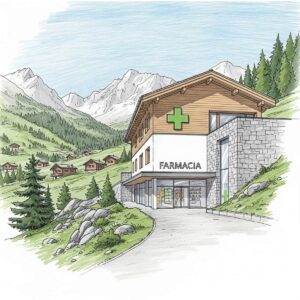
Mountain pharmacies: two seasons of high intensity
The situation is different, but equally demanding, for pharmacies located in mountain areas.
Here, activity peaks can be spread across several periods: winter, with skiers and sports enthusiasts, and summer, with hikers and tourists.
In this case too, the challenge is not only to work faster, but to adapt the organisation to changing needs throughout the year.
Why automate a pharmacy in a tourist area?
[ Back to contents ]
When talking about a dispensing robot, people often think first of dispensing speed.
In tourist pharmacies, however, the value of automation goes beyond simply being faster: it means being able to maintain control over the organisation even when the number of customers suddenly increases.
Automation does not replace the pharmacist’s work. Instead, it reduces many repetitive tasks that, during periods of high demand, take time away from counselling and increase pressure on the team.
When ten people are waiting at the counter
Every tourist pharmacy knows this situation.
Within just a few minutes, the counter becomes crowded, requests increase and staff must divide their attention between customer interaction and searching for products in the warehouse.
The challenge is not only about speed.
Every trip to the back of the pharmacy interrupts the workflow, slows down request management and reduces the time the pharmacist can dedicate to counselling.
With an automated system, products are retrieved faster and in a more organised way, allowing the team to remain more present in the sales area even during the busiest periods.
When the warehouse becomes difficult to manage
During the high season, the warehouse is under constant pressure: product movements increase, the most requested items change and controlling availability and expiry dates becomes more complex.
An automated system helps maintain more precise management of products, reducing the time dedicated to manual checks and the risk of:
- stock shortages of the most requested products;
- unnecessary stock accumulation;
- difficulties in managing expiry dates.
The warehouse once again becomes a support for daily work, rather than an element that slows down the pharmacy’s activity.
When seasonal staff join the team
Many tourist pharmacies need to integrate new employees precisely during their busiest periods.
This means quickly training people who need to understand the pharmacy organisation and become operational in a short time.
A dispensing robot standardises logistics activities: the system always follows the same management rules, automatically organises and identifies products, and makes daily work easier.
Staff can therefore focus more quickly on professional activities and customer relationships.
The goal is not to have a dispensing robot. It is to have a pharmacy that works better.
Those who choose to automate a pharmacy in a tourist area do not do so only to retrieve a pack faster.
The goal is to create an organisation capable of facing the busiest periods of the year with greater peace of mind, reducing unnecessary movements, keeping the counter flow smoother and allowing the pharmacist to dedicate more time to people.
Because, during the weeks when work seems never-ending, the real advantage of automation is not simply doing things faster.
It is allowing the entire pharmacy to work better.
How to understand if it is the right time to automate your pharmacy?
[ Back to contents ]
Not all tourist pharmacies have the same needs.
A pharmacy by the sea, a mountain pharmacy or a pharmacy located in a highly visited tourist area can have very different activity volumes and organisational structures.
However, there are some signs indicating that automation could represent a concrete opportunity:
- During the high season, queues at the counter become frequent.
- The team spends a lot of time searching for products in the back of the pharmacy.
- Integrating seasonal staff requires a significant organisational effort.
- Stock management becomes more complex during periods of higher activity.
- The available storage space is starting to become insufficient.
- You would like to dedicate more time to professional counselling.
If you recognise yourself in several of these situations, it is probably no longer just a temporary period of increased workload: it could be the right time to evaluate a more efficient organisational solution.
Not because a dispensing robot eliminates every challenge, but because it can reduce many repetitive tasks that, during the most demanding periods, consume the team’s time and energy.
What should a dispensing robot do in a tourist pharmacy?
The choice of a dispensing robot should not be based solely on storage capacity.
In a pharmacy characterised by strong seasonal variations, flexibility, ease of use and the ability to adapt to the way the pharmacy operates are essential.
1. Adapt to the pharmacy’s space and changes
Every pharmacy has a different layout.
The automated warehouse must be designed according to the available space, activity volumes and the pharmacy’s objectives.
Solutions such as SINTESI have been developed precisely to offer customised configurations, adapting both to pharmacies requiring high storage capacity and to those that need to optimise every square metre.
2. Be easy to use, even with seasonal staff
During periods of high customer demand, there is no time for complex procedures.
An intuitive interface allows the entire team, including new employees, to use the system quickly and work according to standardised processes.
With GEMINI, the interface developed by Pharmathek together with pharmacists, the main functions are accessible in a simple and immediate way. This feature is particularly valuable for pharmacies where the team changes throughout the year.
3. Make the warehouse smarter
Automation does not only mean storing more packs, but also organising work more efficiently.
During the high season, some products have a very high turnover, while others vary depending on the time of year.
With STRATEGA AI, the Machine Learning algorithm developed by Pharmathek, the dispensing robot analyses the pharmacy’s dispensing habits and continuously optimises the internal organisation. The most requested products are positioned in the most efficient areas of the robot, reducing the time needed to retrieve them.
The pharmacist does not need to constantly reorganise the warehouse: the system evolves and adapts together with the pharmacy’s activity.
4. Make dispensing at the counter smoother
When a prescription includes several packs, the time required to retrieve them can increase.
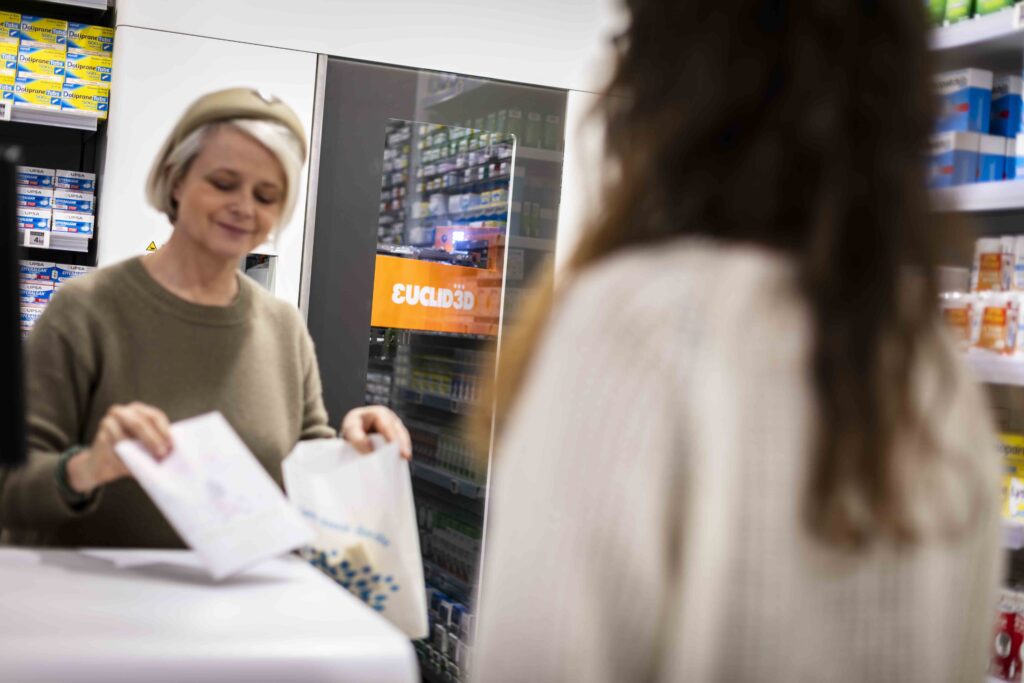
This is why Pharmathek developed Euclid3D, the gripper with integrated onboard storage that can handle several packs simultaneously, helping the team maintain a smoother service even during the busiest periods.
Examples of tourist pharmacies that have chosen automation
Every pharmacy experiences seasonality differently.
The location, type of customers and internal organisation may vary. However, the challenge is often the same: maintaining an efficient service even when the workload suddenly increases.
The experiences of pharmacies that have already started this journey show how automation can adapt to very different situations.
Farmacia del Prado – Cannes
Located in one of the best-known tourist destinations on the French Riviera, Farmacia del Prado manages a significant increase in activity during periods of high customer demand.
The main need was to make daily operations smoother, reducing the time dedicated to logistics activities and allowing the team to focus more on customers.
The pharmacy chose a Pharmathek solution with SINTESI, Pharmaload and Euclid3D, automating the main warehouse management activities and improving work organisation during the busiest periods.
“During the summer season, the dispensing robot becomes essential: it absorbs activity peaks and speeds up service. It is a real advantage during the high season.” – Dr Delaye
Read the full testimonial from Farmacia del Prado in Cannes.
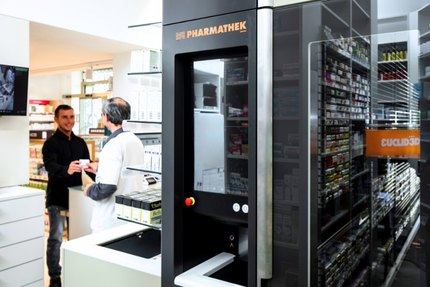

Farmacia Ferigo – Corvara
In the heart of the Dolomites, Farmacia Ferigo faces a different type of seasonality: two periods of high activity linked to winter and summer tourism.
In this context, the challenge was not only to manage workload peaks, but also to have an organisation capable of adapting to changes throughout the year.
Automation has allowed the pharmacy to optimise the available space, improve stock management and handle the different phases of the season more efficiently.
“In pharmacies facing strong seasonal peaks, automation helps manage work more effectively, keeps the warehouse organised and makes procedures more efficient.” – Dr Renzo Clement
Frequently asked questions
Yes.
It is precisely during periods of high demand that the value of automation becomes most evident, allowing pharmacies to better manage workload peaks and maintain a smoother service at the counter.
Yes, in many cases it is possible.
The solution depends on the available space and the pharmacy’s objectives: a feasibility study helps identify the most suitable configuration.
Yes.
An intuitive system allows even new employees to quickly become autonomous after a short training period.
No.
Each pharmacy can choose which products to automate according to its needs, product turnover and internal organisation.
Yes.
Even during quieter periods, it continues to support the pharmacy in warehouse management, expiry date control and daily activities.
Conclusion
[ Back to index ]
For a pharmacy in a tourist location, the high season cannot be avoided. However, it can be managed with a more efficient organisation.
When the number of customers increases rapidly, having a well-prepared team is essential. Equally important is having tools that help people work more smoothly, with greater continuity and less pressure.
Automation does not replace the pharmacist: it allows them to focus more on the activities where their expertise is irreplaceable.
Because when the workload increases, the real difference is not simply doing things faster. It is having a pharmacy that continues to operate efficiently.
If you are considering how to prepare your pharmacy for the next season, the first step is to analyse your needs and understand which organisation can best support your work.
The Pharmathek team can help you assess your available space, operational flows and pharmacy objectives, identifying the solution that best meets your needs.