Dr. Marina Marušić, why did you decide to introduce a robot in your pharmacy?
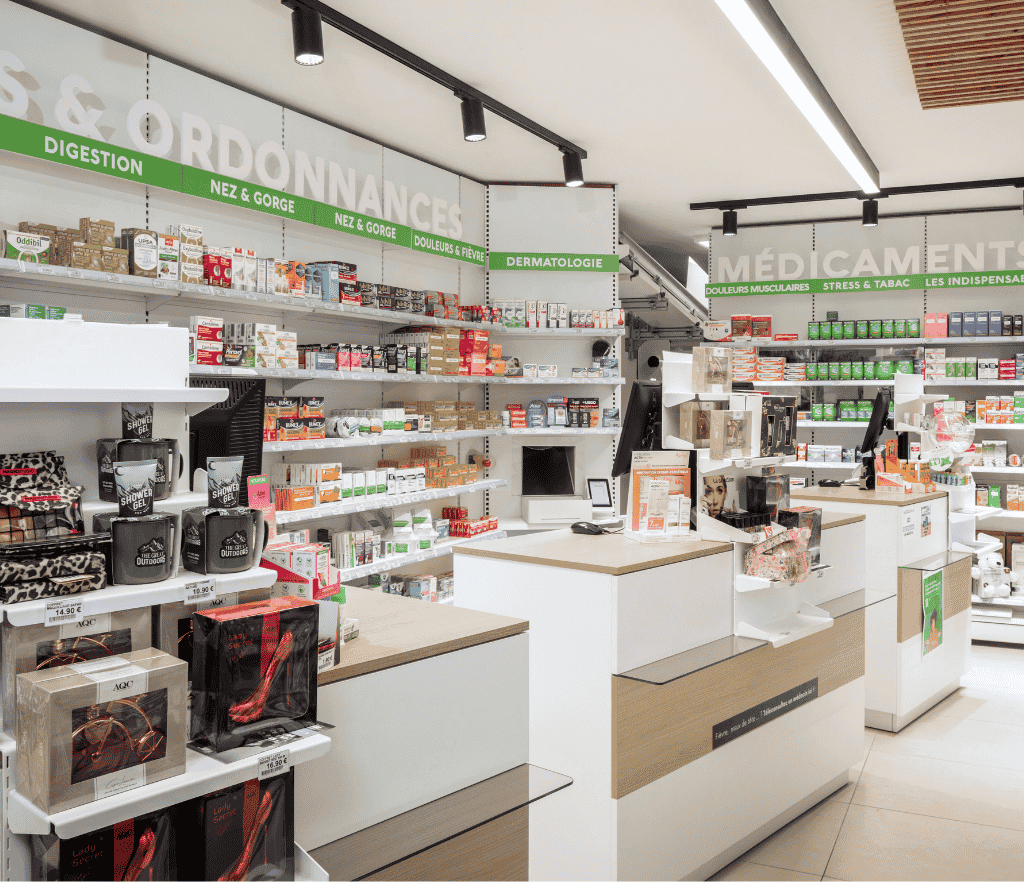
I decided to introduce a robot as part of a broader renovation project, with the aim of optimising our limited space and modernising the pharmacy layout. At the same time, I wanted to relieve the team from repetitive storage tasks and use that time to provide better pharmaceutical care and counselling to our patients.
What led you to choose Pharmathek?
When comparing different solutions, Pharmathek offered us a combination of capability, technical reliability and an automatic loader that met our requirements. The deciding factor was that they were the only supplier with a gripper capable of picking up multiple boxes at once.
Some pharmacists tell us they have given their robot a name, as it becomes part of the team. Did you do the same?
We’ve called it ‘Robi’ now and then, but the name never really stuck because it’s so reliable we rarely talk about it. It just works. It has become an irreplaceable part of the team, the one that quietly does its job. I suppose we’ve started to take it for granted.
How has work in the pharmacy changed since the installation of the robot?
Work in the pharmacy for us has become more structured and much less stressful: receipt of goods, storage and picking are now much faster and more controlled. After just one year we saw concrete results, revenue increased by 22%, the number of prescriptions by 9%, and the team reports significantly less stress and better stock management.
Do you find the SINTESI robot easy to use? Which interface function is most used by your team? Was it easy for your team to start using the robot?
Yes, SINTESI is very easy to use; the interface is clear and the workflows are intuitive even for colleagues who had no previous experience with such systems. The most used functions are those related to automatic loading and real-time stock expiry date control, because they directly support our daily routine. Dispensing we operate mostly from our ERP.
We had excellent local support as well, which made the transition even smoother.
According to your team, what is the most important function of SINTESI?
For my team, the most important function is the fast and reliable automatic dispensing, which significantly reduces the time spent walking and searching for medicines. They also value the precise control of expiry dates and stock rotation, because it gives them confidence that we are managing the warehouse safely and efficiently.
Your robot is installed behind the counter: how important is its quietness in your working environment?
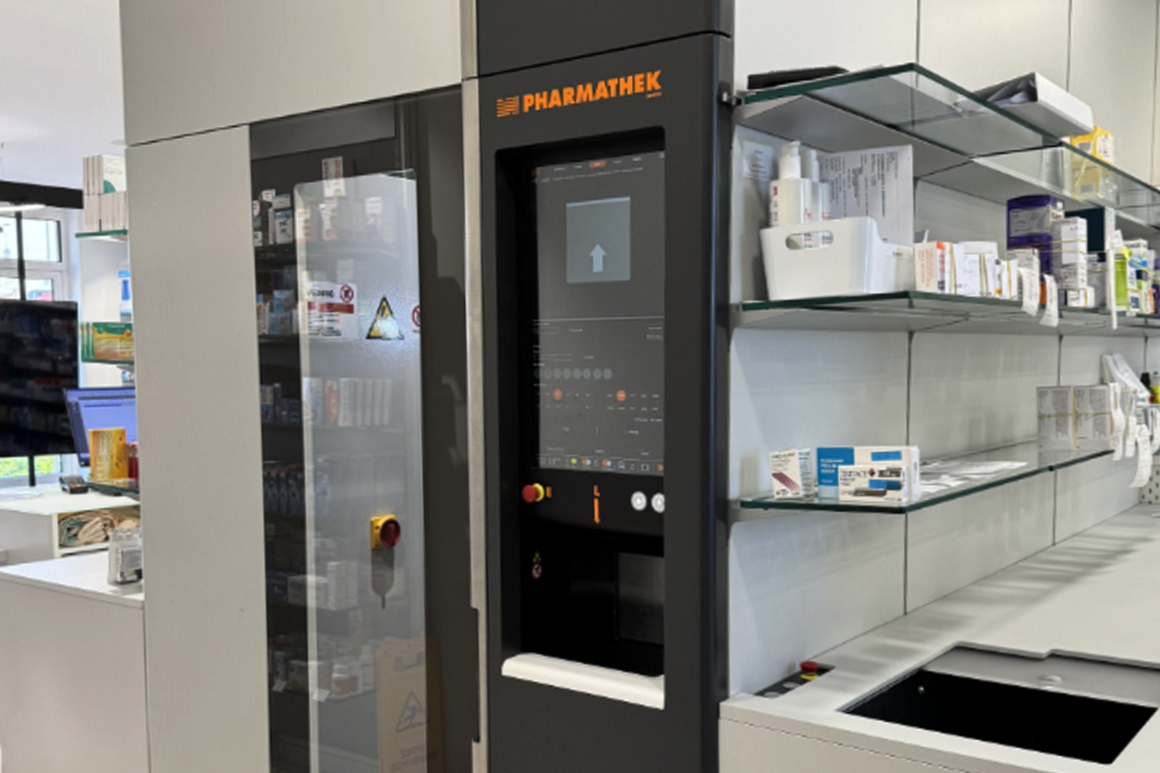
Quietness is very important, because we work in a relatively small space where constant noise would be disturbing both for staff and for patients during counselling. The robot operates discreetly in the background, so it does not interfere with conversations, and patients often hardly notice that a robot is working just behind the counter.
How do you evaluate the integration of display shelves on the robot, both in terms of space optimization and product visibility?
The integrated display shelves are a smart way to use every centimetre of space: they allow us to keep the robot close to the counter without losing valuable merchandising area. At the same time, the colour, material and design of the robot are fully aligned with the rest of the pharmacy furniture, which was the best “hack”, because it allows the unit to blend in perfectly with the overall interior.
What do you think about Pharmaload, the automatic loader?
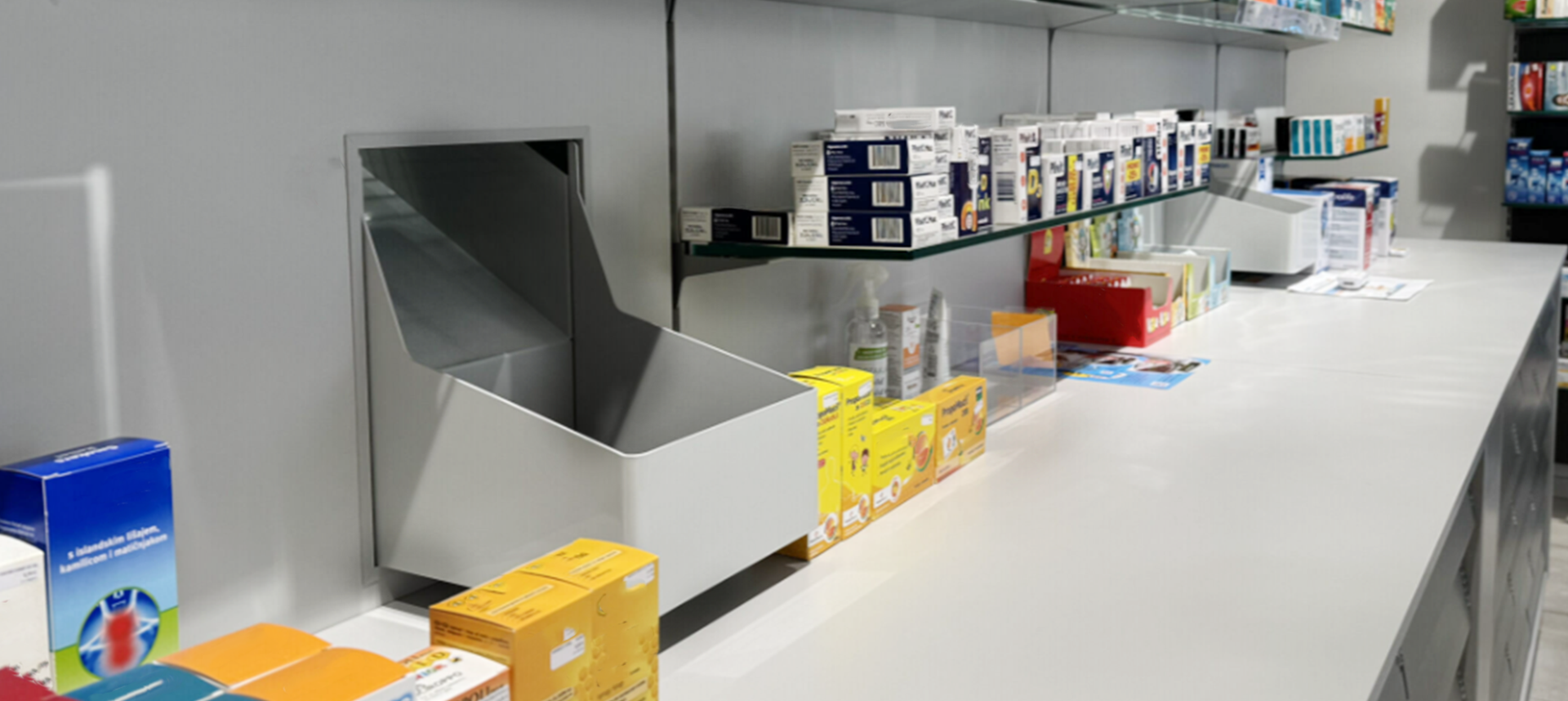
Pharmaload, the automatic loader, is essential for us because it automates one of the most time-consuming tasks: receiving, checking and storing incoming goods. It reads 2D codes, registers expiry dates and places products into storage automatically, which significantly reduces manual work and the risk of human error.
How has the robot helped you become closer to your patients and improve the quality of your service?
By taking over routine storage and picking tasks, the robot has freed up time for pharmacists to be fully present with patients.
We can now dedicate more time to therapy control, to detecting potential problems and to building stronger, more trusting relationships with our patients.
How have your patients responded to the introduction of this technology in your pharmacy?
Patients have reacted very positively. Most of them are curious and ask questions about the new robot, and because it operates so quietly, we even had questions like: “Do you have people working behind that wall who pass you the boxes?”
They see the robot as a sign that we invest in quality and innovation, while still valuing the personal contact and advice they receive from the pharmacists, and they genuinely appreciate that we now have more time to talk to them.
From your experience, would you recommend Pharmathek to your colleagues? Why?
Based on our experience, I would recommend Pharmathek to colleagues who are considering automation in their pharmacy. The system has proven reliable, the support has been excellent, and the impact on efficiency, accuracy and team satisfaction has been clearly positive.
You will be speaking at the upcoming PharmaCRO Congress: could you tell us more about the topic of your presentation?
Since this congress is focused on children’s health, I chose my favourite niche: pharmacotherapy for children with Down syndrome. Down syndrome is the most common chromosomal anomaly and is not even classified as a rare disease. The extra 21st chromosome leads to altered expression of certain enzymes, which results in somewhat different cell metabolism and consequently slightly different pharmacodynamics. This has real-life implications on nutrition, supplements, and medicines in daily practice. In my presentation, I will try to highlight and summarise the most important facts on this topic that pharmacists should be aware of.
Would you like to add anything?
I would just add that automation is not about replacing pharmacists, but about enabling us to fully use our clinical expertise for the benefit of patients. For colleagues who are considering a robot, my advice is to see it as a strategic investment in the future of their pharmacy and in the wellbeing of their team.